First season foundations: lesson 6 of 6
Knowing when to harvest
What ready looks like for fourteen common vegetables, why picking often keeps plants producing, and how to handle what you pick so it is clean and keeps.
- 5 min read
- Beginner
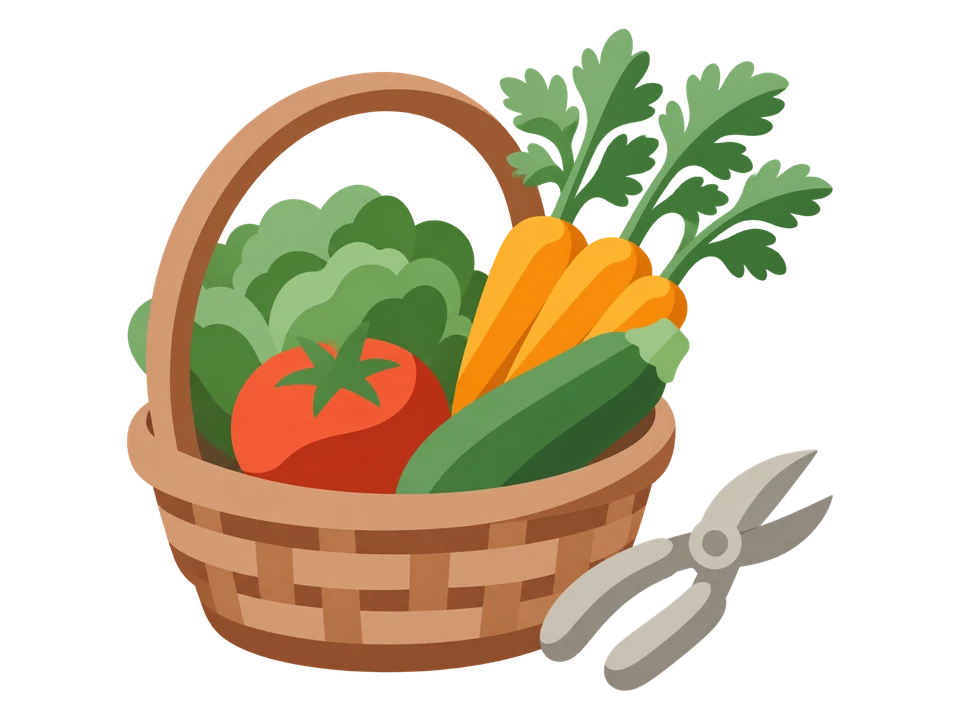
The days to maturity on a seed packet tell you when to start looking, not when to pick. Maryland Extension notes that the variety and the growing conditions both shift the real harvest date. Once you are within a week or two of that number, check every day or two and go by what the plant shows you.
Signs of ready, crop by crop
Sizes are from Illinois Extension and New Mexico State's harvest guide. Where they differ, both are given.
| Crop | Pick when |
|---|---|
| Tomatoes | Fully colored and still firm, or at the first blush of color to finish indoors (see below) |
| Zucchini and summer squash | 6 to 8 inches long and no more than 2 inches across, while a thumbnail still dents the skin |
| Cucumbers | Slicers 6 to 8 inches (New Mexico State says 5 to 8), picklers 2 to 6 inches, before the skin starts to yellow |
| Snap beans | Full length, crisp enough to snap, before the seeds swell the pod |
| Peas | Shelling peas when pods are full but still bright green; snap peas as pods begin to fatten; snow peas at about 3 inches |
| Lettuce | Whenever leaves are big enough to use, and before hot weather turns it bitter and it bolts |
| Carrots | 1/2 to 1 inch across at the top (Illinois); New Mexico State says 3/4 to 1 1/2 |
| Beets | 1 1/2 to 3 inches across (Illinois); New Mexico State says 1 1/2 to 2. Illinois says many varieties turn tough and woody past 3 inches |
| Radishes | About 1 inch across, usually 3 to 4 weeks from sowing; Illinois says they turn hot and tough if left in the ground too long |
| Peppers | Full size and firm. Green bells at 3 to 4 inches long, or leave them to turn their ripe color |
| Sweet corn | Silks brown and dry, and a kernel pressed with a thumbnail gives milky juice |
| Onions | About half the tops have fallen over and bulbs are 2 inches or more across |
| Potatoes | New potatoes once they are over 1 inch across; full-size ones after the vines yellow and die back |
| Winter squash | Deep, solid color and a rind a thumbnail cannot dent, before a hard frost; cut with at least 2 inches of stem. Illinois says the shine is gone by then; New Mexico State calls the rind firm and glossy |
Tomatoes
- Pick when
- Fully colored and still firm, or at the first blush of color to finish indoors (see below)
Zucchini and summer squash
- Pick when
- 6 to 8 inches long and no more than 2 inches across, while a thumbnail still dents the skin
Cucumbers
- Pick when
- Slicers 6 to 8 inches (New Mexico State says 5 to 8), picklers 2 to 6 inches, before the skin starts to yellow
Snap beans
- Pick when
- Full length, crisp enough to snap, before the seeds swell the pod
Peas
- Pick when
- Shelling peas when pods are full but still bright green; snap peas as pods begin to fatten; snow peas at about 3 inches
Lettuce
- Pick when
- Whenever leaves are big enough to use, and before hot weather turns it bitter and it bolts
Carrots
- Pick when
- 1/2 to 1 inch across at the top (Illinois); New Mexico State says 3/4 to 1 1/2
Beets
- Pick when
- 1 1/2 to 3 inches across (Illinois); New Mexico State says 1 1/2 to 2. Illinois says many varieties turn tough and woody past 3 inches
Radishes
- Pick when
- About 1 inch across, usually 3 to 4 weeks from sowing; Illinois says they turn hot and tough if left in the ground too long
Peppers
- Pick when
- Full size and firm. Green bells at 3 to 4 inches long, or leave them to turn their ripe color
Sweet corn
- Pick when
- Silks brown and dry, and a kernel pressed with a thumbnail gives milky juice
Onions
- Pick when
- About half the tops have fallen over and bulbs are 2 inches or more across
Potatoes
- Pick when
- New potatoes once they are over 1 inch across; full-size ones after the vines yellow and die back
Winter squash
- Pick when
- Deep, solid color and a rind a thumbnail cannot dent, before a hard frost; cut with at least 2 inches of stem. Illinois says the shine is gone by then; New Mexico State calls the rind firm and glossy
Tomatoes can finish on the counter
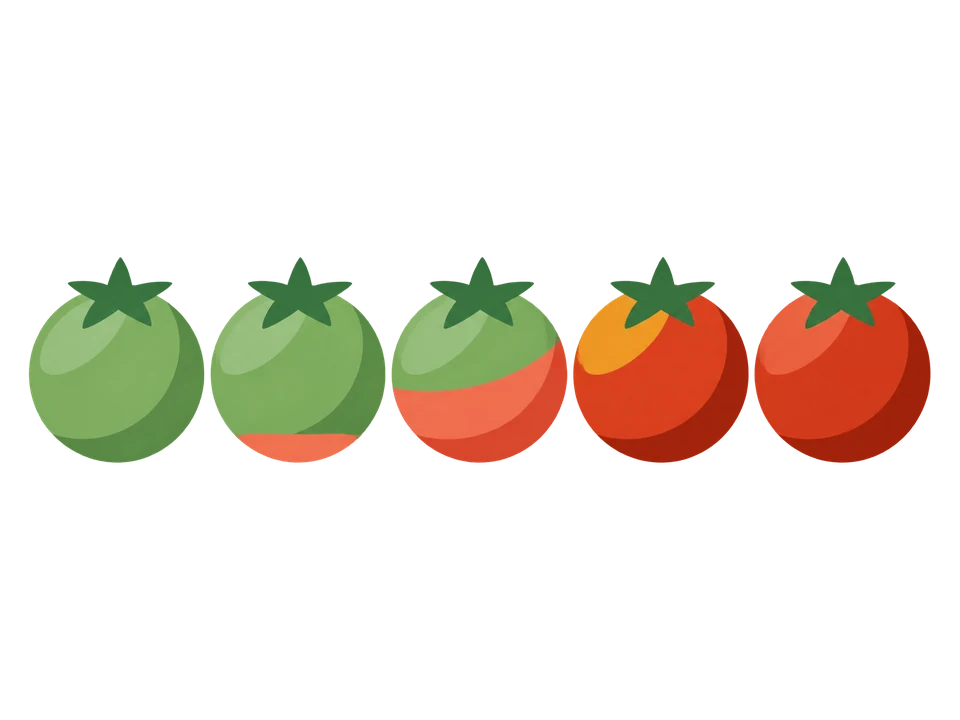
Penn State Extension says a tomato is ripe, physiologically, at the breaker stage: the first blush of color at the blossom end. Picked then and ripened indoors, it has a vine-ripened flavor, and it escapes cracking, sunscald, and further insect damage. Penn State adds that ripening slows or stops when the weather stays above about 85 degrees F, and Illinois notes that around 90 degrees tomatoes soften fast and color poorly, so in a hot spell, picking at first color and ripening indoors is often better. Before the first fall frost, Illinois suggests bringing in mature green fruit to ripen indoors, though Penn State notes fruit picked fully green will not develop its full flavor.
Picking keeps plants going
Illinois Extension recommends removing overripe fruit so the plant puts its energy into new flowers instead of seeds. For zucchini and summer squash it suggests picking every other day, or every day when the plants are going strong, and checking cucumbers every other day. That is how the oversized zucchini happens: a promising squash on Monday is a club by Thursday. If one gets away from you, pick it anyway.
Morning, dry leaves, and a sharp tool
Illinois says most vegetables are best picked early in the morning, when they are cool and crisp. If you pick later, keep the harvest shaded until it goes inside. Pick when the plants are dry, because moving through wet foliage spreads disease. Cut beans, peppers, squash, and other tough stems with a knife or pruners rather than pulling, so you do not tear the plant.
Keep the harvest clean
Produce from your own garden can carry the same germs as any other produce. Penn State Extension and the FDA recommend a few simple habits.
- Pick into clean containers, and keep separate tools for compost and manure.
- Keep pets and chickens out of the beds, and do not eat produce that has touched animal droppings. Leafy greens, strawberries, and carrots are the most at risk because they grow close to the soil.
- Wash your hands with soap and warm water for at least 20 seconds before and after handling produce.
- Rinse produce under running water just before eating. The FDA does not recommend soap, detergent, or commercial produce washes. Scrub firm produce such as melons and cucumbers with a clean brush, and cut away bruised spots.
- Refrigerate perishable produce promptly.
Count what you pick
Log each picking on the Harvests page. By the end of the season you will know which crops earned their space, and when each one really came in where you live, which is better than any packet date.
Where this comes from
The numbers and advice here were checked against these pages. Where they disagree, the lesson says so and follows the more careful one.
- extension.umd.edu /resource/when-plant-vegetables (opens in a new tab)
- hort.extension.wisc.edu /articles/safely-using-manure-garden (opens in a new tab)
- extension.illinois.edu /blogs/good-growing/2024-06-28-harvesting-vegetables-when-and-how-pick-your-vegetables-best-quality (opens in a new tab)
- pubs.nmsu.edu /_h/H216 (opens in a new tab)
- extension.psu.edu /is-this-tomato-ready-to-harvest (opens in a new tab)
- fda.gov /food/buy-store-serve-safe-food/selecting-and-serving-produce-safely (opens in a new tab)
- extension.psu.edu /home-garden-food-safety-protecting-produce-from-contamination (opens in a new tab)